THE DAILY SCROLL: The Death of the False King
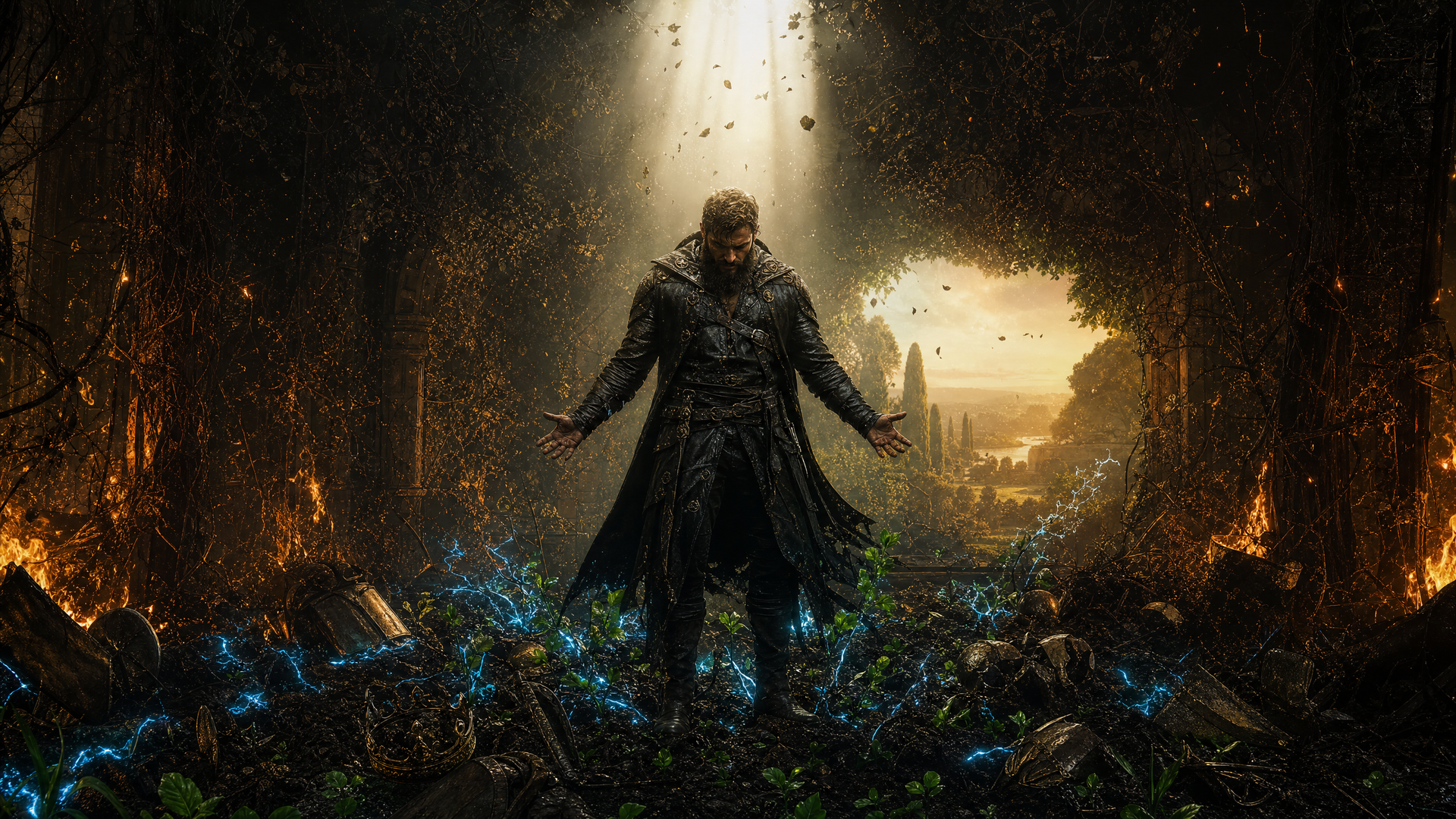
Introduction
There comes a season when a man realizes the life he built to prove his power has quietly become the prison stealing his peace.
He built the company.
He bought the symbols.
He carried the image.
He became the man others admired.
And yet, somewhere beneath the success, the soul began to whisper:
This is not freedom.
Not because success is evil.
Not because wealth is wrong.
Not because ambition is sin.
But because anything built to prove a man’s worth eventually demands his soul as payment.
The old king builds to be seen.
The son of God builds from being known.
And when the Father begins to call a man home, He does not always add more.
Sometimes He starts cutting.
Chapter I — The Kingdom of More
For years, the man was told that more would save him.
More money.
More influence.
More speed.
More access.
More status.
More proof.
So he built.
He chased.
He expanded.
He performed.
And the world applauded.
But the applause did not quiet the ache.
The achievements did not remove the pressure.
The symbols did not create peace.
And the empire he thought would make him free slowly became a machine he had to feed every day.
This is the illusion of the old kingdom:
It convinces a man that if he gains enough of the world, he will finally stop feeling afraid.
But fear does not leave because a man gains the world.
Fear leaves when a man stops trading his soul to keep it.
Chapter II — The Funeral of the False King
The False King does not die easily.
He is addicted to being recognized.
He loves the image.
He loves the room turning when he walks in.
He loves the evidence that he matters.
But beneath the crown is a frightened boy still trying to prove he is enough.
And eventually, God brings that man to a holy confrontation.
Not to shame him.
To save him.
The Father begins to ask:
What are you carrying that no longer bears fruit?
What are you funding that no longer creates freedom?
What are you defending because your ego is attached to it?
What are you calling success that is actually stealing your soul?
The False King calls this failure.
The Father calls it pruning.
Chapter III — The Pruning of the Son
Pruning feels like loss to the ego.
But pruning is mercy to the soul.
God cuts what is draining life.
He removes what is no longer fruitful.
He exposes the places where a man has confused status with authority and image with identity.
The son does not resist the Gardener.
The son submits.
He lets the dead branches fall.
He lets the symbols lose their power.
He lets the old life burn.
Not because he hates what he built.
But because he refuses to worship it.
A man does not become free by adding more weight to his life.
He becomes free by surrendering what was never his identity to begin with.
Chapter IV — The Return to Agreement
The old king makes decisions alone.
He calls it leadership.
But often it is fear wearing armor.
He moves fast.
He carries the burden.
He hides the shaking.
Then asks his wife and family to live inside the consequences of choices they were never invited into.
But the Kingdom does not restore a man in isolation.
The Kingdom restores order.
A free man does not lead by dictatorship.
He leads through presence.
He brings the truth into the light.
He invites agreement.
He stops performing certainty and starts practicing honesty.
For the home cannot walk into freedom if the man keeps building the future alone.
Two cannot walk together unless they are agreed.
And the next kingdom must be built with clean hands, a clear heart, and a unified house.
Chapter V — The Garden Returned
The dream was never the image.
The dream was peace.
The dream was breath.
The dream was presence.
The dream was a home filled with life.
The dream was children laughing without the father being crushed by the pressure of maintaining a costume.
The dream was a wife who felt included, protected, and honored.
The dream was waking up without needing the world to confirm who he was.
The dream was God.
This is where Eden returns.
Not in the bigger empire.
Not in the louder brand.
Not in the next symbol of success.
Eden returns when a man stops proving and starts abiding.
When he stops performing freedom and starts choosing it.
When he counts the trophies of the old life as loss compared to the surpassing worth of walking with Christ.
Epilogue — The Free Man
The Free Man is not the man with nothing.
He is the man owned by nothing.
He can build.
He can lead.
He can create.
He can carry wealth.
But he no longer needs wealth to tell him who he is.
He no longer needs applause to validate his authority.
He no longer needs symbols to manufacture significance.
He has already been named by the Father.
He is a son.
He is a steward.
He is a king under the King.
And from that place, he can finally build what does not require him to lose his soul to keep it alive.
The Creed of the Free Man
I release the image.
I release the costume.
I release the need to be seen as powerful.
I release the symbols that no longer bear fruit.
I will not trade my soul for status.
I will not call pressure peace.
I will not confuse success with freedom.
I will walk with God.
I will tell the truth.
I will lead my home in agreement.
I will build from presence, not performance.
I am not the False King.
I am a son of the King.
And from the ashes of the old empire,
Eden rises again.